 World Calendars
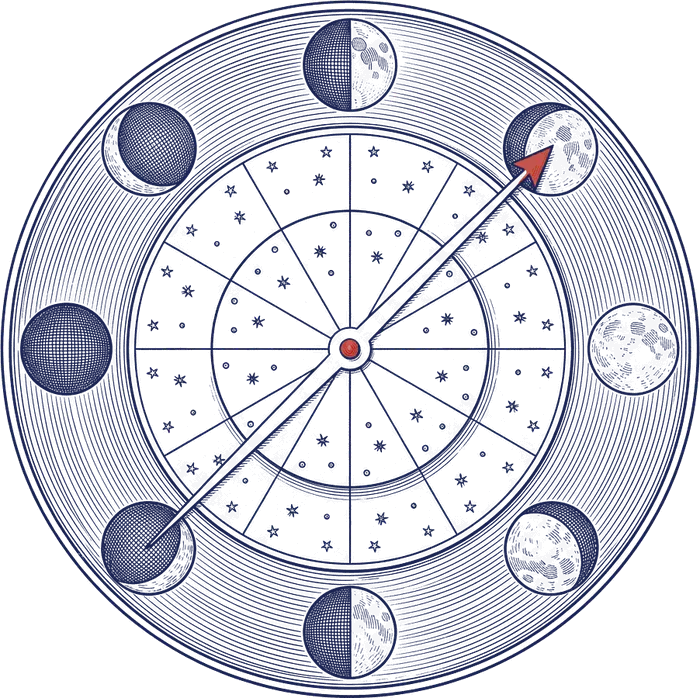
Vietnamese lunar calendar today
The Vietnamese lunar calendar sets the date of Tết and other traditional holidays. It follows the same rules as the Chinese calendar, but since 1968 it has been calculated for Vietnam's own time zone, so the two sometimes start a month or a new year on different days.
Month 10, day 3
mùng 3 tháng 10 năm Bính Ngọ
Bính Ngọ year (Year of the Horse)
- In the Gregorian calendar
- Wednesday 11 November 2026
- This day began
- At midnight, as Wednesday 11 November 2026 begins
- This day ends
- At midnight, as Thursday 12 November 2026 begins
- Year Bính Ngọ (2026) began
- Tuesday 17 February 2026
- Next new year
- Saturday 6 February 2027 (in 87 days)
- This year has
- 354 days in 12 months
- Type
- Lunisolar - months begin on the day of the new moon
- Time zone used
- UTC+7 (105° East) since 1 January 1968, before that the Chinese calendar
- New Year
- Tết - the first day of tháng Giêng, in late January or February
- Year names
- 60-year Can Chi cycle - the Cat replaces the Rabbit, the Buffalo replaces the Ox
Next holidays in this calendar
87 days
Tết (Vietnamese New Year) Month 1, day 1
6 February 2027 · Vietnamese (Âm lịch)
How the Vietnamese calendar works
Each month starts on the day of the new moon in Vietnam, so months have 29 or 30 days, and the 15th (rằm) is near the full moon. The month that contains the December solstice is always the 11th month. When there are 13 new moons between two of these solstice months, a leap month is added: the first month in that span with no major solar term repeats the number of the month before it and is called "tháng nhuận".
Years are named with the 60-year Can Chi cycle, which pairs one of 10 heavenly stems with one of 12 earthly branches, such as Bính Ngọ for the year that began on 17 February 2026. The branches are linked to 12 animals, and Vietnam uses the Cat where China uses the Rabbit and the water buffalo for the Ox.
| No. | Name | Meaning |
|---|---|---|
| 1 | tháng Giêng | first month, starts at Tết |
| 2 | tháng Hai | second month |
| 3 | tháng Ba | third month |
| 4 | tháng Tư | fourth month |
| 5 | tháng Năm | fifth month |
| 6 | tháng Sáu | sixth month |
| 7 | tháng Bảy | seventh month |
| 8 | tháng Tám | eighth month |
| 9 | tháng Chín | ninth month |
| 10 | tháng Mười | tenth month |
| 11 | tháng Mười Một (tháng Một) | contains the December solstice |
| 12 | tháng Chạp | last month before Tết |
Variants and the method used here
Vietnam and China use the same rules, but a new moon that happens shortly before midnight in China falls on the previous day in Vietnam, which is one hour behind. Most years the two calendars match, but Tết fell on different days in 1968, 1985 and 2007 and will again in 2030. In 1985 Vietnam celebrated Tết on 21 January, a full month before China.
This page calculates new moons and solar terms for UTC+7 for dates from 1 January 1968, the day Decision 121-CP took effect, and uses the Chinese calendar (UTC+8) for earlier dates. Older regional or dynastic Vietnamese almanacs are not reproduced.
A short history
Vietnam has long used the Chinese lunisolar calendar, and from 1324 the Trần dynasty used the Thụ Thời calendar brought from the Yuan dynasty. The Nguyễn dynasty adopted Qing calculation methods in 1812, and its Hiệp Kỷ calendar began to differ from the Chinese one in 1841 because of the difference in longitude.
The French introduced the Gregorian calendar, and from 1954 Vietnamese administrative offices officially used it. On 8 August 1967 the North Vietnamese government decided that the lunar calendar would be calculated for Vietnam's own time zone, UTC+7, from 1 January 1968. North and South Vietnam therefore celebrated Tết 1968 on different days, until the South joined the change in 1975.
Sources
How this site calculates the date: The Chinese lunisolar rules computed for Vietnam: UTC+7 since 1968 (Decision 121-CP of 1967), UTC+8 before. Months start on the day of the new moon; month 11 holds the December solstice.