 World Calendars
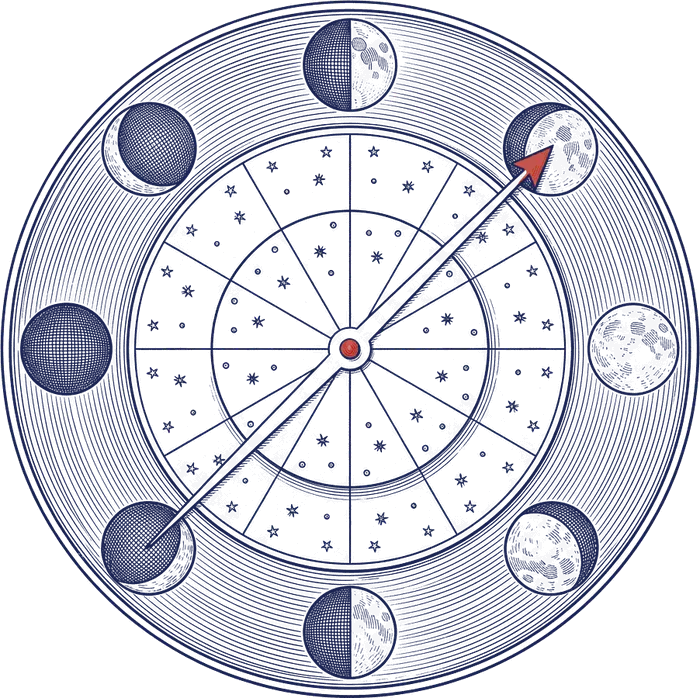
Chinese lunar date today
China's traditional calendar, which sets the date of Chinese New Year, follows both the moon and the sun. Every month starts at a new moon, and an extra month is added about every three years.
Month 10, day 3
2026丙午年十月初三
Fire Horse year (bing-wu, 丙午)
- In the Gregorian calendar
- Wednesday 11 November 2026
- This day began
- At midnight, as Wednesday 11 November 2026 begins
- This day ends
- At midnight, as Thursday 12 November 2026 begins
- Year bing-wu year began
- Tuesday 17 February 2026
- Next new year
- Saturday 6 February 2027 (in 87 days)
- This year has
- 354 days in 12 months
- How it works
- Months start at each new moon; an extra month keeps pace with the seasons
- A year has
- 353 to 355 days, or 383 to 385 with the extra month
- New year
- Between 21 January and 20 February; next on 6 February 2027
- Unusual detail
- Years carry names in a 60-year cycle; 2026 is the Fire Horse
Next holidays in this calendar
87 days
Chinese New Year Month 1, day 1, Fire Goat year (ding-wei, 丁未)
6 February 2027 · Chinese
101 days
Lantern Festival Month 1, day 15, Fire Goat year (ding-wei, 丁未)
20 February 2027 · Chinese
210 days
Dragon Boat Festival Month 5, day 5, Fire Goat year (ding-wei, 丁未)
9 June 2027 · Chinese
How the Chinese calendar works
A day runs from midnight to midnight. Each month begins on the day of the new moon and has 29 or 30 days, so a year of 12 months has 353 to 355 days and a year with a leap month has 383 to 385. In everyday use the months are numbered 1 to 12; month 1 is also called Zhēngyuè and month 12 Làyuè. Each month is paired with one of the 12 earthly branches and its zodiac animal.
The sun enters the calendar through the 24 solar terms, points 15° apart along its yearly path. Twelve of them are major terms, and a month takes its number from the major term it contains. Month 11 must always contain the winter solstice.
| No. | Earthly branch | Major solar term in the month |
|---|---|---|
| 1 | Yín (Tiger) | Yǔshuǐ, Rain Water (330°) |
| 2 | Mǎo (Rabbit) | Chūnfēn, spring equinox (0°) |
| 3 | Chén (Dragon) | Gǔyǔ, Corn Rain (30°) |
| 4 | Sì (Snake) | Xiǎomǎn, Corn Forms (60°) |
| 5 | Wǔ (Horse) | Xiàzhì, summer solstice (90°) |
| 6 | Wèi (Goat) | Dàshǔ, Great Heat (120°) |
| 7 | Shēn (Monkey) | Chǔshǔ, End of Heat (150°) |
| 8 | Yǒu (Rooster) | Qiūfēn, autumn equinox (180°) |
| 9 | Xū (Dog) | Shuāngjiàng, Frost (210°) |
| 10 | Hài (Pig) | Xiǎoxuě, Light Snow (240°) |
| 11 | Zǐ (Rat) | Dōngzhì, winter solstice (270°) |
| 12 | Chǒu (Ox) | Dàhán, Severe Cold (300°) |
If 13 new moons fall between the start of month 11 and the start of the next month 11, one of those months is a leap month: the first that contains no major term. It takes the number of the month before it. In 2033 the leap month follows month 11, the first time since the reform of 1645.
Chinese New Year, the first day of month 1, usually falls on the second new moon after the winter solstice, and always between 21 January and 20 February. The next one is on 6 February 2027.
Years are named in a 60-year cycle that pairs the 10 heavenly stems, each linked to one of five elements, with the 12 branches. The current cycle began with a jiǎzǐ year in 1984 and the next begins in 2044. The year from 17 February 2026 is bǐngwǔ, the Fire Horse, year 43 of the cycle.
Variants and the method used here
The calendar is now defined by the national standard GB/T 33661-2017, issued by the Standardization Administration of China on 12 May 2017. Korea and Vietnam apply the same rules in their own time zones.
Dates here for 1901 to 2100 come from our own table of months, computed from the new moons and solar terms at UTC+8, China Standard Time, or on the Beijing meridian from 1912 to 1928. It places the leap month of 2033 after month 11. Every month is checked against the tables of the Hong Kong Observatory, and two differ by a day: the Observatory starts a month on 28 September 2057 and on 7 August 2097, while our calculation puts those new moons less than a minute after midnight. The Observatory warns that its dates for both may be a day out. Dates outside these years come from ICU, the date library built into your browser.
The animal shown here changes at Chinese New Year. Some astrologers start the animal year at Lìchūn, the start of spring, near 4 February.
A short history
Stem-branch pairs first appear counting days on Shang dynasty oracle bones, late in the second millennium BC. The Taichu calendar of Emperor Wu of Han, introduced in 104 BC, fixed the month at 29 43/81 days.
The Shíxiàn calendar, used from 1645 to 1913, set the solar terms at equal 15° steps of the sun's path; before that the year was divided into equal spans of time. On 2 January 1912 Sun Yat-sen announced a new official calendar and era. A 1929 ban on the traditional calendar failed and was lifted in 1934.
Sources
How this site calculates the date: Chinese lunisolar calendar, from our own month table for 1901-2100, computed by the rules of the national standard. Other years come from the date library built into your browser (ICU).
Dates checked every month against Hong Kong Observatory conversion tables.