 World Calendars
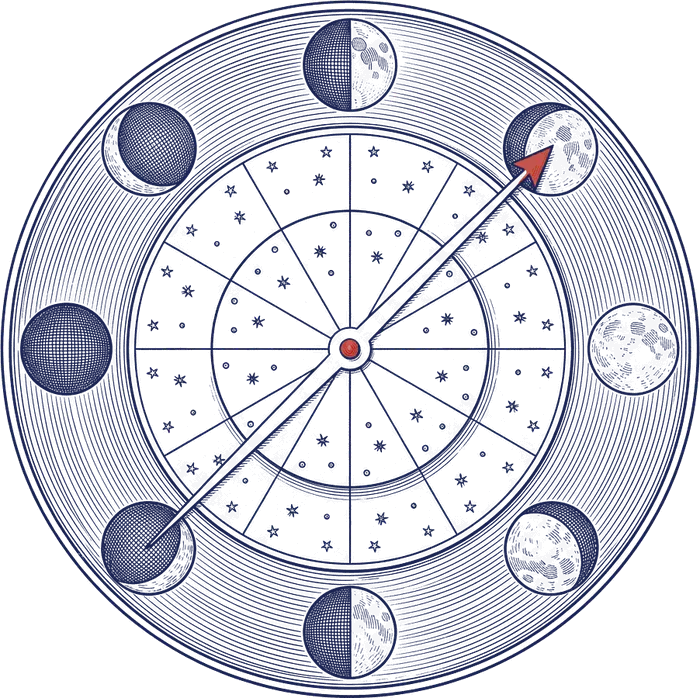
Korean lunar date today
Korea's traditional calendar is the Chinese lunar calendar set to Korean time, so a holiday can fall a day later than in China. It still sets the dates of Seollal, the Lunar New Year, and Chuseok, the harvest festival.
Month 10, day 3, 4359
병오년 10월 3일
Horse year, Dangi era
- In the Gregorian calendar
- Wednesday 11 November 2026
- This day began
- At midnight, as Wednesday 11 November 2026 begins
- This day ends
- At midnight, as Thursday 12 November 2026 begins
- Year Lunar year bing-wu began
- Tuesday 17 February 2026
- Next new year
- Sunday 7 February 2027 (in 88 days)
- This year has
- 355 days in 12 months
- Dangi year 1
- 2333 BC, the legendary founding of Gojoseon
- Who uses it
- Koreans, for traditional holidays such as Lunar New Year and the harvest festival
- How it works
- Months start at each new moon, timed one hour ahead of China
- Years count from
- 2333 BC, a legendary founding date, so 2026 is year 4359
- Unusual detail
- In 15 years from 1914 to 2099, Seollal or Chuseok differs from China
Next holidays in this calendar
88 days
Seollal (Korean New Year) Month 1, day 1, 4360
7 February 2027 · Korean (Dangi)
308 days
Chuseok Month 8, day 15, 4360
15 September 2027 · Korean (Dangi)
How the Korean calendar works
Koreans use the Gregorian calendar day to day, while traditional holidays still follow the lunar calendar. Each month begins on the day of the new moon and has 29 or 30 days. A leap month is added when the 24 solar terms (jeolgi), spaced about 15 days apart, call for one. Months are numbered with Sino-Korean numerals and wol; the older names follow the zodiac animals.
| No. | Month | Traditional name |
|---|---|---|
| 1 | Il-wol (also jeong-wol, "primary month") | Horangi-dal, Tiger month |
| 2 | I-wol | Tokki-dal, Rabbit month |
| 3 | Sam-wol | Yong-dal, Dragon month |
| 4 | Sa-wol | Baem-dal, Snake month |
| 5 | O-wol | Mal-dal, Horse month |
| 6 | Yu-wol | Yang-dal, Sheep month |
| 7 | Chil-wol | Wonsungi-dal, Monkey month |
| 8 | Pal-wol | Dak-dal, Rooster month |
| 9 | Gu-wol | Gae-dal, Dog month |
| 10 | Si-wol | Dwaeji-dal, Pig month |
| 11 | Sibil-wol (also dongjit-dal, "winter solstice month") | Jwi-dal, Rat month |
| 12 | Sibi-wol (also seot-dal) | So-dal, Ox month |
The Korean zodiac has the Sheep where the Chinese has the Goat. Seollal, the Lunar New Year, is day 1 of month 1, usually the second new moon after the winter solstice; South Korea takes the day before and the day after as holidays too. Seollal fell on 17 February 2026. Chuseok, the harvest festival at the full moon on day 15 of month 8, is also three days in the South and one in North Korea; its name means "autumn evening". In 2026 the Chuseok holiday ran from 24 to 26 September.
Variants and the method used here
Korea takes new moons and solar terms at UTC+9, the time of the 135°E meridian, and China at UTC+8. When a new moon falls in the first hour after midnight in Korea, it is still the previous day in China, so the Korean month starts a day later. In 2028 Chinese New Year is on 26 January and Seollal on 27 January. A 2005 report by CBS Nocut News counted 15 years between 1914 and 2099 in which Seollal or Chuseok differ between the two countries, and the dates computed on this site give the same 15.
Dates here come from ICU, the date library built into your browser. It uses UTC+8 for most years up to 1911 and UTC+9 from 1912, including 1954 to 1961, when South Korean clocks were set to UTC+8:30. This page follows the official rule for the Dangi year: the Gregorian year plus 2333, changing on 1 January, not at Seollal.
A short history
Korea used calendars made in China: the Tang Xuanming calendar until 1281, then the Yuan Shoushi calendar. Under Sejong the Great, the Chiljeongsan became the first calendar system computed for Korea. The Qing Shixian calendar was adopted in 1653 and used in earnest from 1725. The Gregorian calendar was adopted on 1 January 1896.
The Dangi era counts from the legendary founding of Gojoseon by Dangun, set in 2333 BC from the Tongguk t'onggam of 1485. It was South Korea's official year count until a 1961 law made the Common Era official from 1 January 1962. Seollal was banned in 1907 under Japanese pressure, declared a folk day from 1985 to 1988, and restored as a national holiday in 1989.
Sources
How this site calculates the date: Korean lunisolar calendar, computed by the date library built into your browser (ICU). The Dangi year is the Gregorian year plus 2333.