 World Calendars
Hebrew date today
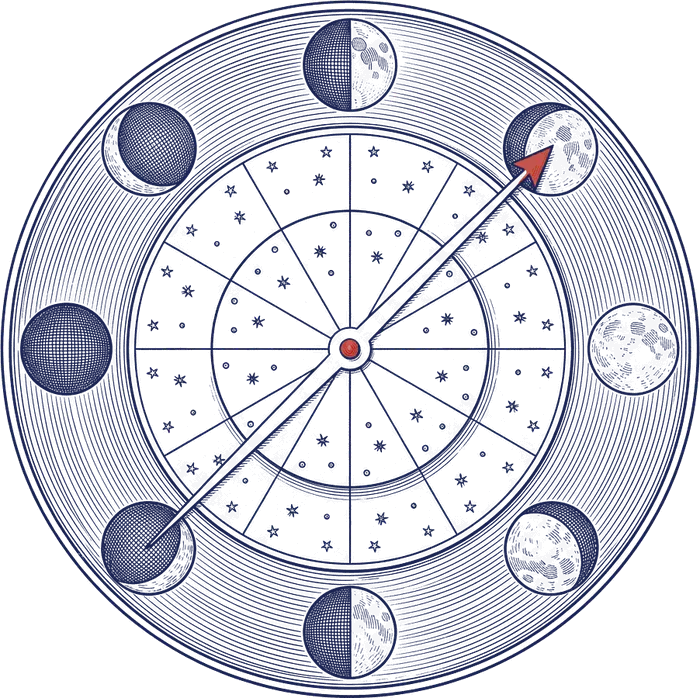
The Jewish calendar. Its months follow the moon, and in some years an extra month is added so that festivals such as Passover stay in their seasons.
1 Kislev 5787
א׳ בכסלו תשפ״ז
- In the Gregorian calendar
- Wednesday 11 November 2026
- This day began
- At sunset on Tuesday 10 November 2026
- This day ends
- At sunset on Wednesday 11 November 2026, when it becomes 2 Kislev 5787
- Year 5787 began
- At sunset on Friday 11 September 2026
- Next new year
- At sunset on Friday 1 October 2027 (in 324 days)
- This year has
- 385 days in 13 months
- Year 1 began
- 7 September 3761 BC (Gregorian calendar counted backwards)
- Who uses it
- Jewish communities, to set Shabbat, Rosh Hashanah, Passover and other holy days
- How it works
- Months follow the moon; a 13th month is added 7 times in 19 years
- Years count from
- 3761 BC, the traditional date of creation
- Day begins
- At sunset, so every festival starts in the evening
Next holidays in this calendar
How the Hebrew calendar works
A month lasts 29 or 30 days, close to one cycle of the moon. Twelve months make a common year of 353, 354 or 355 days, about 11 days short of the solar year. To stop the festivals drifting through the seasons, a leap year adds a 13th month, Adar I, before Adar. Leap years are years 3, 6, 8, 11, 14, 17 and 19 of a 19-year cycle and have 383, 384 or 385 days. The year 5787, which began in September 2026, is a leap year.
The day runs from one sunset to the next, following Genesis 1:5: "there was evening and there was morning, one day". That is why Shabbat and every festival begin in the evening, and why this page shows the date that starts at sunset.
| No. | Month | Days |
|---|---|---|
| 1 | Tishri | 30 |
| 2 | Heshvan (Marheshvan) | 29 or 30 |
| 3 | Kislev | 30 or 29 |
| 4 | Tevet | 29 |
| 5 | Shevat | 30 |
| - | Adar I (leap years only) | 30 |
| 6 | Adar (Adar II in leap years) | 29 |
| 7 | Nisan | 30 |
| 8 | Iyar | 29 |
| 9 | Sivan | 30 |
| 10 | Tamuz | 29 |
| 11 | Av | 30 |
| 12 | Elul | 29 |
Heshvan and Kislev change length so that the year comes out right. The year count, Anno Mundi, starts from the traditional date of creation. Its reference new moon, the molad tohu, falls in October 3761 BC on the Julian calendar, so from Rosh Hashanah to December you add 3761 to the Gregorian year, and 3760 for the rest of the year.
When the year starts: the molad and the postponements
The calendar is calculated, not observed. Each month starts from the molad, a mean new moon computed with a fixed interval of 29 days, 12 hours and 793 parts (a part is 1/18 of a minute). Rosh Hashanah, 1 Tishri, usually falls on the day of the Tishri molad, but four postponement rules can move it by a day or two:
- If the molad is at or after noon, Rosh Hashanah moves to the next day.
- Rosh Hashanah never falls on a Sunday, Wednesday or Friday. If it would, it moves one day later.
- Two rarer rules stop a common year from being too long, or the year after a leap year from being too short.
So Rosh Hashanah only ever falls on a Monday, Tuesday, Thursday or Saturday.
Variants and the method used here
One Hebrew calendar is in use today, so the date itself has no variants. Jewish law leaves open whether the new day starts at sunset or at nightfall, when three stars are visible. This page shows the date until sunset and the date from sunset, without using your location.
Dates here come from @internationalized/date, an open-source date library. We test it against ICU, the date library built into browsers, on every third day from 1900 to 2100. They disagree only from November 2045 to November 2046, where ICU 77 starts the year 5807 a day late. Our date matches Hebcal and the molad rules: 1 Tishri 5807 is Monday 1 October 2046.
A short history
In the time of the Temple, a month began when two witnesses told the Sanhedrin they had seen the new crescent. A 13th month was added when the barley and fruit were not yet ripe or the spring equinox was late. The fixed calculated calendar used today is traditionally credited to Hillel II in 358-359 CE, a date given by Hai Gaon (died 1038); historians have questioned that tradition.
The calculated year is a little longer than the solar year: it drifts by about one day every 216 years. Since the 4th century, the earliest possible date of Passover has moved about eight days later.
Sources
How this site calculates the date: Fixed arithmetic Hebrew calendar (molad and postponement rules). The day begins at sunset.
Dates checked every month against Hebcal, one date every 29 days from 1900 to 2100.