 World Calendars
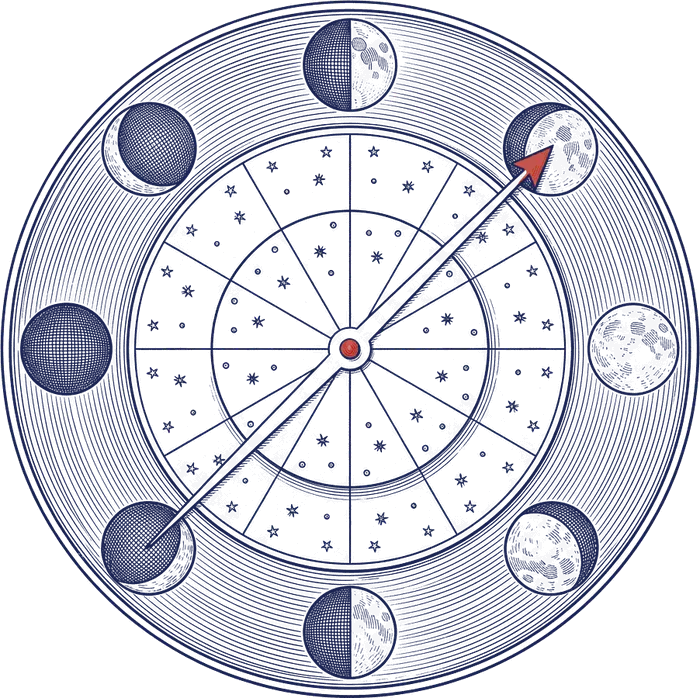
Tibetan calendar date today
The Tibetan calendar is a lunisolar calendar based on the Kalacakra Tantra. Its months follow the moon, a leap month is added about every three years, and because each day is named after the lunar day, some dates are skipped and others happen twice.
Month 10 (smin drug), day 2
ལོ་༢༡༥༣ ཟླ་༡༠ ཚེས་༢
Fire Male Horse year 2153
- In the Gregorian calendar
- Wednesday 11 November 2026
- This day began
- At midnight, as Wednesday 11 November 2026 begins
- This day ends
- At midnight, as Thursday 12 November 2026 begins
- Year 2153, Fire Male Horse began
- Wednesday 18 February 2026
- Next new year
- Sunday 7 February 2027 (in 88 days)
- This year has
- 354 days in 12 months
- Years count from
- 127 BC, the traditional date of the first Tibetan king
- Type
- Lunisolar - months of 29 or 30 days, years of 12 or 13 months
- Version shown
- Phugpa, the most common version, introduced in 1447
- New Year
- Losar - the first day of month 1, in February or early March
- Year count
- 60-year element-animal cycle, Tibetan year 2153 from Losar 2026
Next holidays in this calendar
88 days
Losar (Tibetan New Year) Month 1 (mchu), day 1
7 February 2027 · Tibetan (Phugpa)
219 days
Saga Dawa Düchen Month 4 (sa ga), day 15
18 June 2027 · Tibetan (Phugpa)
How the Tibetan calendar works
A lunar month is divided into 30 lunar days, and each calendar day, from dawn to dawn, takes the number of the lunar day that is current when it begins. Lunar days vary in length, so a number is skipped when two lunar days end on the same calendar day, and a number is repeated when no lunar day ends on a calendar day. The calendar uses fixed arithmetic rules for the mean and true positions of the sun and moon rather than observation.
Months are counted 1 to 12, and a leap month is inserted twice in every 65 solar months. The leap month comes first and has the same number as the regular month after it. Years are named by one of five elements, male or female, and one of twelve animals, giving a 60-year cycle; the year that began on 18 February 2026 is the Fire-Male-Horse year.
Each month also has a name taken from a lunar mansion, given below in Wylie transliteration.
| No. | Name (Wylie) | Note |
|---|---|---|
| 1 | mchu | First month, starts at Losar |
| 2 | dbo | |
| 3 | nag pa | |
| 4 | sa ga | Saga Dawa (sa ga zla ba) |
| 5 | snron | |
| 6 | chu stod | |
| 7 | gro bzhin | |
| 8 | khrums | |
| 9 | tha skar | |
| 10 | smin drug | |
| 11 | mgo | Tiger month in Phugpa almanacs |
| 12 | rgyal | Last month before Losar |
Variants and the method used here
There are two main versions of the Tibetan calendar in use today, Phugpa and Tsurphu, and Bhutan and Mongolia use their own versions. The versions use similar methods but often differ by a day or a month, and Tsurphu almanacs, for example, name month 1 after the Tiger while Phugpa almanacs name month 11 after it.
This page shows the Phugpa version, calculated with the formulas published by Svante Janson in "Tibetan Calendar Mathematics", using the epoch of 806 CE. These formulas reproduce the traditional calculation, including leap months and skipped and doubled days, without modern astronomy.
A short history
The calendar is based on the Kalacakra Tantra, which was translated from Sanskrit into Tibetan in the 11th century; tradition dates the translation to 1027, when the first 60-year cycle (rabjung) began. The Kalacakra calendar became the standard in Tibet in the second half of the 13th century.
In 1447 Phugpa Lhündrub Gyatso founded the Phugpa tradition, which became the most common version of the calendar. Since the second half of the 20th century, years have also been counted from 127 BCE, the traditional date of the first Tibetan king, so 2026 is the year 2153.
Sources
How this site calculates the date: Phugpa tradition, computed with the integer formulas of Svante Janson, "Tibetan Calendar Mathematics" (epoch 806). Lunar days can be skipped or doubled; a leap month comes before the month it repeats.