 World Calendars
Hindu calendar today
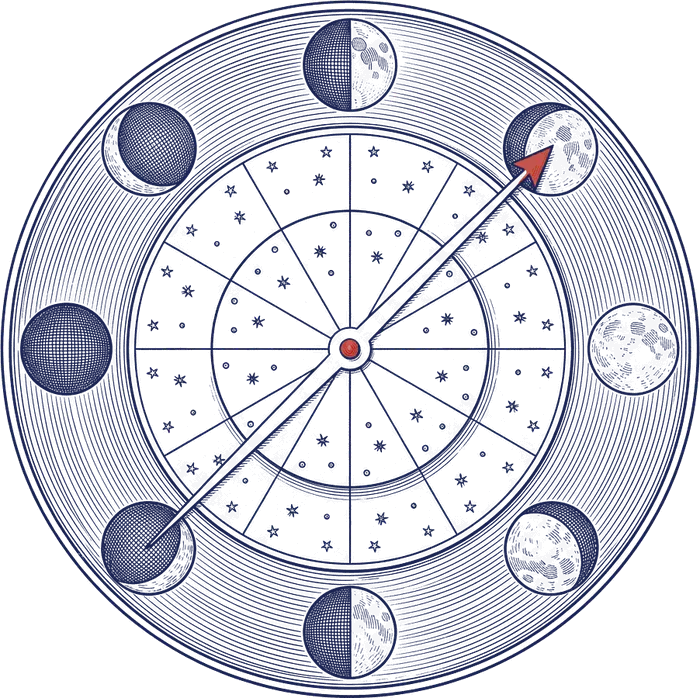
The Hindu calendar counts days by the moon and keeps its year in step with the sun. Each day is named by its tithi, the lunar day that is running at sunrise, inside a month that begins at the new moon.
Kartika Shukla Dvitiya
कार्तिक शुक्ल द्वितीया, विक्रम संवत् २०८३
Vikram Samvat 2083, Shaka 1948
- In the Gregorian calendar
- Wednesday 11 November 2026
- This day began
- At midnight, as Wednesday 11 November 2026 begins
- This day ends
- At midnight, as Thursday 12 November 2026 begins
- Year Vikram Samvat 2083 began
- Thursday 19 March 2026
- Next new year
- Wednesday 7 April 2027 (in 147 days)
- This year has
- 384 days in 13 months
- Years count from
- 57 BC, by tradition; the Shaka era counts from AD 78
- Year count
- Vikram Samvat from 57 BC and Shaka from AD 78, both starting each year at Chaitra Shukla Pratipada
- Day count
- 30 tithis per lunar month, 15 in the waxing half and 15 in the waning half
- Leap month
- An extra month about every 32.5 months; 2026 has one (Adhika Jyeshtha)
- Used for
- Hindu festivals and rituals in India and Nepal, next to the Gregorian calendar
Next holidays in this calendar
132 days
Holi Chaitra Krishna Pratipada
23 March 2027 · Hindu (Vikram Samvat)
147 days
Hindu New Year (Gudi Padwa, Ugadi) Chaitra Shukla Pratipada
7 April 2027 · Hindu (Vikram Samvat)
352 days
Diwali Kartika Krishna Amavasya
29 October 2027 · Hindu (Vikram Samvat)
How the Hindu calendar works
A tithi is the time it takes the moon to move 12 degrees ahead of the sun, so a lunar month has 30 tithis. The first 15 make the bright half (Shukla paksha), ending at full moon (Purnima). The next 15 make the dark half (Krishna paksha), ending at new moon (Amavasya). A day takes the tithi that is running at sunrise, so a tithi can be skipped or repeated.
Each month is named after the zodiac sign the sun enters during it, measured against the stars. Twelve lunar months are about 11 days shorter than a solar year. When a whole lunar month passes without the sun entering a new sign, it becomes an extra month (adhika masa) and the year has 13 months.
| No. | Month | Hindi | Sign the Sun enters during it |
|---|---|---|---|
| 1 | Chaitra | चैत्र | Mesha (Aries) |
| 2 | Vaishakha | वैशाख | Vrishabha (Taurus) |
| 3 | Jyeshtha | ज्येष्ठ | Mithuna (Gemini) |
| 4 | Ashadha | आषाढ़ | Karka (Cancer) |
| 5 | Shravana | श्रावण | Simha (Leo) |
| 6 | Bhadrapada | भाद्रपद | Kanya (Virgo) |
| 7 | Ashvina | आश्विन | Tula (Libra) |
| 8 | Kartika | कार्तिक | Vrishchika (Scorpio) |
| 9 | Margashirsha | मार्गशीर्ष | Dhanu (Sagittarius) |
| 10 | Pausha | पौष | Makara (Capricorn) |
| 11 | Magha | माघ | Kumbha (Aquarius) |
| 12 | Phalguna | फाल्गुन | Meena (Pisces) |
An extra month takes the name of the month that follows it, with the word Adhika. In 2026 an Adhika Jyeshtha ran from 17 May to 15 June, before the regular Jyeshtha.
Variants and the method used here
Regions disagree on where a month starts. North India and Nepal end each month at full moon (purnimanta), while Gujarat, Maharashtra and the south end it at new moon (amanta). The bright half has the same name in both; the dark half is named after the next month in the purnimanta system. This page shows the purnimanta name, and the amanta name as well when the two differ.
This site takes the tithi at sunrise in New Delhi and names months with the Lahiri ayanamsa, the standard adopted by India's Calendar Reform Committee. Dates for Diwali and Holi are checked against the Government of India holiday list for Delhi. Local panchangs that use another city, older formulas or other festival rules can differ by a day. The tables behind this page cover 1900 to 2100.
A short history
Tradition says King Vikramaditya of Ujjain founded the Vikram Samvat era, which starts in 57 BCE, but that link does not appear in any source before the 9th century CE. The Shaka era begins in 78 CE and is common in inscriptions from southern India, while Vikram Samvat is common in the north, west, centre and east.
In 1952 India set up a Calendar Reform Committee under the CSIR, chaired by Meghnad Saha with N. C. Lahiri as secretary; it found more than thirty well-developed calendars in use. In 1955 the committee made a Spica-based ayanamsa, later called the Lahiri ayanamsa, the standard for Hindu sidereal calendars. India's national almanac, the Rashtriya Panchang, has been published since 1957-58 and now appears in Hindi, English and 12 other languages.
Sources
How this site calculates the date: Lunisolar, for New Delhi: the tithi running at sunrise, months from new moon to new moon named with the Lahiri ayanamsa (an extra adhika month when the Sun enters no new sign). Shown in the purnimanta naming of North India; years from Chaitra Shukla Pratipada.