 World Calendars
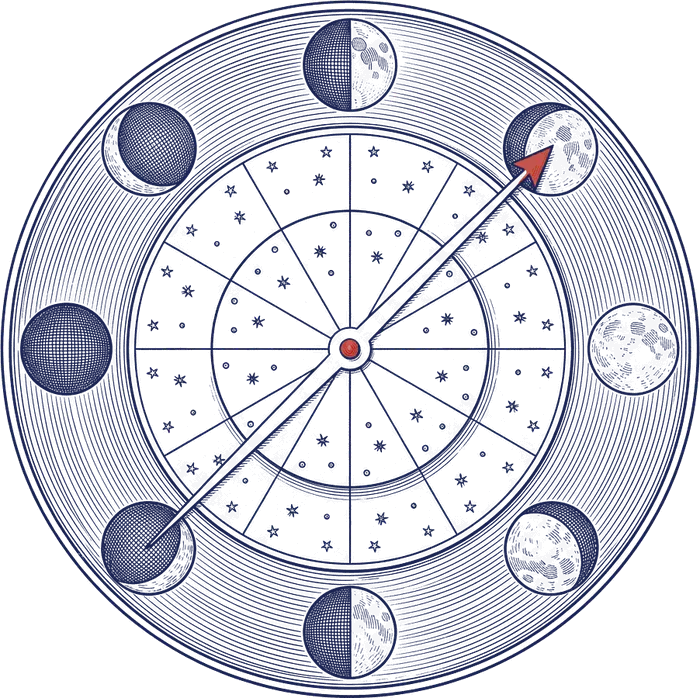
Coligny calendar today
The Coligny calendar is a bronze plate from Roman Gaul that sets out five years of lunar months in the Gaulish language. How its months matched our own dates is still unknown.
Cutios, second half, day 9
CVTIOS ATENOVX IX
Year 2 of 5, a MAT month (McKay, extended)
- In the Gregorian calendar
- Wednesday 11 November 2026
- This day began
- At midnight, as Wednesday 11 November 2026 begins
- This day ends
- At midnight, as Thursday 12 November 2026 begins
- Year Year 2 of 5 began
- Sunday 24 May 2026
- Found
- 1897 at Coligny, Ain, France, near Lyon
- Cycle
- 5 years of 62 lunar months, including 2 extra months
- Months
- 29 or 30 days, split into two halves by the word ATENOVX
- Kept at
- Gallo-Roman museum of Lyon-Fourvière, Lyon
How the Coligny calendar works
The plate lays out a five-year cycle. Each year has twelve lunar months of 29 or 30 days, and an extra month is added about every two and a half years to keep the moon in step with the sun, giving 62 months in all. Every month is split into two halves by the word ATENOVX, and each day has a hole where a peg could mark the current date.
Months are marked MAT ("good") or ANM ("not good"). The year falls into two halves, one beginning with Samonios and one with Giamonios, names usually linked to the Gaulish words for summer and winter.
The months below are in the order of the plate. The first extra month comes before Samonios in year 1, the second between Cutios and Giamonios in year 3. The meanings are proposals, mostly from the linguist Xavier Delamarre.
| No. | Month | Days | Mark | Proposed meaning |
|---|---|---|---|---|
| Extra 1 | Quimonios? (plate: QVIMON) | 29 or 30 (contested) | - | Unknown |
| 1 | Samonios | 30 | MAT | Linked to "assembly" or "summer" |
| 2 | Dumannios | 29 | ANM | Possibly "month of fumigations" |
| 3 | Rivros | 30 | MAT | Possibly "fat month" |
| 4 | Anagantios | 29 | ANM | Possibly "month when one does not travel" |
| 5 | Ogronios | 30 | MAT | Possibly "month of cold" |
| 6 | Cutios | 30 | MAT | Possibly "month of invocations" |
| Extra 2 | [.]antaran (Rantaranos or Bantaranos?) | 30 | - | Unknown |
| 7 | Giamonios | 29 | ANM | Related to "winter" |
| 8 | Simivisonnios | 30 | MAT | "Half" of the sun's course, or "half-spring" |
| 9 | Equos | 29 or 30 | ANM | Possibly horses or livestock |
| 10 | Elembivios | 29 | ANM | Month of the stag |
| 11 | Edrinios | 30 | MAT | Related to "fire, heat" |
| 12 | Cantlos | 29 | ANM | Possibly "month of chanting" |
Variants and the method used here
The Coligny calendar is a reconstruction. Only about 40 percent of the plate survives, and it gives no link to the Roman calendar, so no one knows on which day any of its months began. Scholars disagree even on the season. Garrett Olmsted links Samonios to the winter solstice, Helen McKay places it at the start of summer, about May, and others link it to the Irish feast of Samhain in early November.
The table on this page follows the text of the plate. The "today" date follows Helen McKay's 2020 reconstruction, in which each month starts at the first-quarter moon and modern dates are given from 2015 to 2025. After May 2025 we simply repeat her 1,831-day cycle. That extension is ours, not hers, and her own later tables may differ from it. For that reason the date is shown only for the years 2015 to 2035. It is a modern exercise, not an ancient date.
A short history
The plate was found in 1897 at Coligny, near Lyon, together with pieces of a bronze statue, probably of the god Mars. It was probably made in the 2nd century AD, but copying errors suggest the calendar itself is much older. It is written in Gaulish with Latin letters and Roman numerals, and today it is kept in the Gallo-Roman museum in Lyon.
The Roman writer Pliny the Elder reported that the druids of Gaul began their months and years on the sixth day of the moon, and counted ages of thirty years.
Sources
How this site calculates the date: Helen McKay's 2020 reconstruction: months start at the first-quarter moon in a 62-month, 1,831-day cycle from 30 April 2020. Her published dates run from 2015 to 2025; later dates repeat her cycle. Shown for 2015-2035 only.