 World Calendars
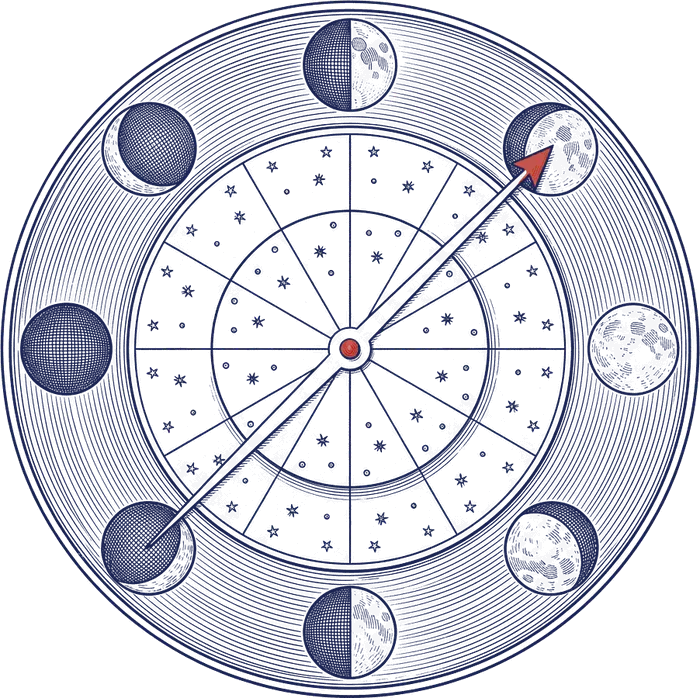
Attic calendar date today
The Attic calendar was the festival calendar of ancient Athens. Its months followed the Moon, and the year began with the month Hekatombaion after the summer solstice.
Maimakterion 2
Μαιμακτηριών
2026/27, Olympiad 701, year 2
- In the Gregorian calendar
- Wednesday 11 November 2026
- This day began
- At sunset on Tuesday 10 November 2026
- This day ends
- At sunset on Wednesday 11 November 2026, when it becomes Maimakterion 3
- Year 2026/27 began
- At sunset on Tuesday 14 July 2026
- Next new year
- At sunset on Sunday 4 July 2027 (in 235 days)
- This year has
- 355 days in 12 months
- Who used it
- The city of Athens, to schedule its religious festivals
- How it works
- 12 lunar months of 29 or 30 days, with a 13th month about every third year
- Years count from
- No era; years were named after an archon, and historians counted Olympiads from 776 BC
- Unusual detail
- The last day of each month was called "the old and the new"
Next holidays in this calendar
235 days
Attic New Year Hekatombaion 1
From sunset on 4 July 2027 · Attic (Athenian)
How the Attic calendar works
Each month began with the new moon and lasted 29 days (a hollow month) or 30 days (a full month). The days were counted in three groups of about ten, for the waxing, middle and waning Moon, and the last day was called henē kai nea, "the old and the new". The year was meant to start with the first new moon after the summer solstice.
Twelve lunar months fall short of a solar year, so roughly every third year Athens added a month by repeating a month name, most often Poseideon. Each year was named after the archon, the chief magistrate who held office that year.
| No. | Month | Greek | Approx. | Days |
|---|---|---|---|---|
| 1 | Hekatombaion | Ἑκατομβαιών | Jul/Aug | 29 or 30 |
| 2 | Metageitnion | Μεταγειτνιών | Aug/Sep | 29 or 30 |
| 3 | Boedromion | Βοηδρομιών | Sep/Oct | 29 or 30 |
| 4 | Pyanepsion | Πυανεψιών | Oct/Nov | 29 or 30 |
| 5 | Maimakterion | Μαιμακτηριών | Nov/Dec | 29 or 30 |
| 6 | Poseideon | Ποσειδεών | Dec/Jan | 29 or 30 |
| - | Poseideon II (leap years) | Ποσειδεὼν ὕστερος | Jan | 29 or 30 |
| 7 | Gamelion | Γαμηλιών | Jan/Feb | 29 or 30 |
| 8 | Anthesterion | Ἀνθεστηριών | Feb/Mar | 29 or 30 |
| 9 | Elaphebolion | Ἐλαφηβολιών | Mar/Apr | 29 or 30 |
| 10 | Mounichion | Μουνυχιών | Apr/May | 29 or 30 |
| 11 | Thargelion | Θαργηλιών | May/Jun | 29 or 30 |
| 12 | Skirophorion | Σκιροφοριών | Jun/Jul | 29 or 30 |
The Athenian day ran from one sunset to the next, so this page also shows the date that begins this evening.
Variants and the method used here
No Athenian calendar table survives. The calendar was set month by month by officials, who sometimes moved it several days away from the Moon, and the choice of leap years followed no known cycle. The dates on this page are a modern reconstruction, not a historical record.
We use a common modern model: each month starts on the day after the astronomical new moon, Hekatombaion 1 is the first such day after the summer solstice, and when 13 months fit before the next Hekatombaion a second Poseideon is added. This matches the default settings of the Heniautos software. For ancient dates, treat the day as accurate to a few days and the month as uncertain in leap years. For later dates, the calendar is computed as if these rules had continued. Olympiad years here start on Hekatombaion 1; counts that start them at the midsummer full moon differ by about two weeks.
A short history
Athens used this lunar calendar for its festivals alongside a civic calendar that divided the year among the ten tribes serving in the council, each term called a prytany. In 432 BC the astronomer Meton observed the summer solstice in Athens, in the year of the archon Apseudes, and with Euctemon he worked out a 19-year cycle of months, but there is no sign that Athens adopted it.
Greek historians later needed a common way to date events. Timaeus, in the 3rd century BC, was the first to count years consistently by Olympiads, the four-year periods between Olympic Games, counted from the first Games in 776 BC.
Sources
How this site calculates the date: A modern reconstruction (the default model of the Heniautos software): each month starts the day after the new moon, Hekatombaion 1 is the first such day after the June solstice, and a 13-month year repeats Poseideon. Accurate to a few days for ancient dates.