 World Calendars
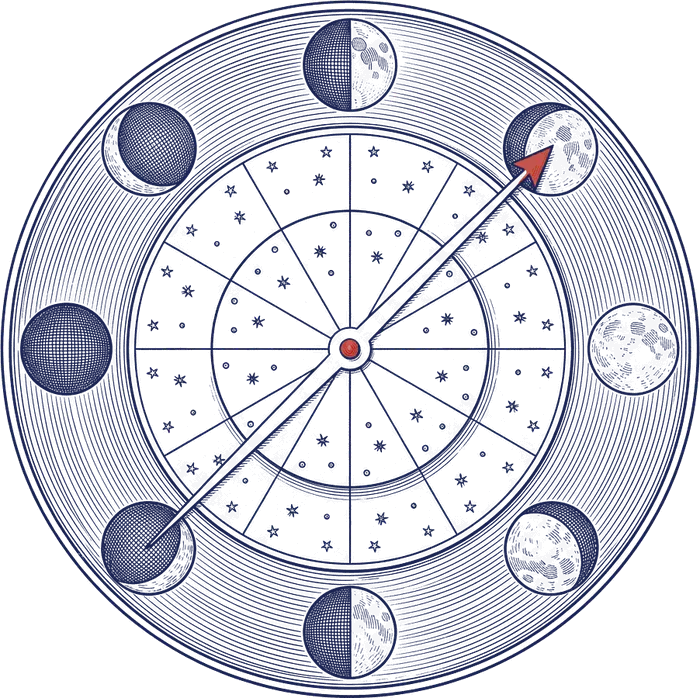
Babylonian calendar date today
The Babylonian calendar began each month with the first sighting of the new crescent Moon and began the year in spring with Nisannu. From about 500 BC a fixed 19-year cycle decided when to add a 13th month.
30 Tašrītu, year 2337 SE
Seleucid Era 2337, Arsacid Era 2273
- In the Gregorian calendar
- Wednesday 11 November 2026
- This day began
- At sunset on Tuesday 10 November 2026
- This day ends
- At sunset on Wednesday 11 November 2026, when it becomes 1 Araḫsamna, year 2337 SE
- Year 2337 SE began
- At sunset on Saturday 18 April 2026
- Next new year
- At sunset on Thursday 8 April 2027 (in 148 days)
- This year has
- 355 days
- Seleucid Era from
- 29 March 311 BC, 3 April 311 BC in the Julian calendar (Gregorian calendar counted backwards)
- Who used it
- Babylonia and its neighbours, for government, trade and temple ritual
- How it works
- 12 or 13 lunar months of 29 or 30 days, each starting with the first crescent
- Years count from
- The Seleucid Era, whose year 1 began on 3 April 311 BC
- Unusual detail
- Its leap months were a second Addaru, or in one year of 19 a second Ulūlu
Next holidays in this calendar
148 days
Babylonian New Year 1 Nīsannu, year 2338 SE
From sunset on 8 April 2027 · Babylonian
How the Babylonian calendar works
A month began on the evening when the thin crescent of the new Moon was first seen low in the west after sunset, so the day itself began at sunset. Because the Moon goes round in about 29.5 days, each month had 29 or 30 days, and no fixed scheme set which.
Twelve such months fall short of a solar year, so a 13th month was added from time to time. From about 500 BC this followed a 19-year cycle with seven leap years: usually a second Addaru was added at the end of the year, but in one year of the cycle a second Ulūlu was added in the middle.
| No. | Month | Approx. | Days |
|---|---|---|---|
| I | Nīsannu | Mar/Apr | 29 or 30 |
| II | Ayyāru | Apr/May | 29 or 30 |
| III | Sīmannu | May/Jun | 29 or 30 |
| IV | Duʾūzu | Jun/Jul | 29 or 30 |
| V | Ābu | Jul/Aug | 29 or 30 |
| VI | Ulūlu | Aug/Sep | 29 or 30 |
| VIb | Ulūlu II (leap years only) | Sep | 29 or 30 |
| VII | Tašrītu | Sep/Oct | 29 or 30 |
| VIII | Araḫsamna | Oct/Nov | 29 or 30 |
| IX | Kislīmu | Nov/Dec | 29 or 30 |
| X | Ṭebētu | Dec/Jan | 29 or 30 |
| XI | Šabāṭu | Jan/Feb | 29 or 30 |
| XII | Addāru | Feb/Mar | 29 or 30 |
| XIIb | Addāru II (leap years only) | Mar/Apr | 29 or 30 |
Since the day began at sunset, this page also shows the date that begins this evening.
Variants and the method used here
Historians convert Babylonian dates with the tables of Parker and Dubberstein, which cover 626 BC to AD 75 and are themselves calculated from when the crescent should first have been visible at Babylon. This page is a modern reconstruction in the same spirit, not a historical record: we compute the first visible crescent at Babylon for each month and apply the 19-year cycle, counting years in the Seleucid Era.
Before about 380 BC the real calendar did not always follow the cycle, so month names in early years may be one month off, and any single day may differ by one from what the Babylonians actually observed. After AD 75 the calendar is computed as if its rules had continued. The 19-year cycle runs very slightly slow, so today the year starts in April, later than it did in antiquity.
A short history
The calendar goes back to the Sumerian and Akkadian month calendars of Mesopotamia, and its month names were written with old Sumerian signs. For centuries the Babylonians added leap months when they saw the need. From about 535 BC they used an 8-year scheme, and from about 500 BC a 19-year cycle with seven leap months, which ran without exception from about 380 BC.
Under the Seleucid kings, Babylonian scribes counted years in a continuous era whose first year began in the spring of 311 BC. The Hebrew calendar uses closely matching month names, such as Nisan, Tishri and Adar.
Sources
How this site calculates the date: A reconstruction: months start after the first evening the crescent Moon is visible at Babylon (Yallop's criterion), and leap months follow the 19-year cycle in use from about 500 BC, with years of the Seleucid Era. After AD 75 the rules are simply continued.